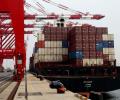
Economic recovery from the pandemic in the US has helped India achieve the $400-billion mark for exports for the first time in any fiscal year. According to the preliminary data compiled by the Department of Commerce, India exported goods worth $73 billion to the US from April 1 to March 21 - up 47 per cent, compared to last year. The US' share of exports, compared to total exports, stood at 18.2 per cent. The country is also India's largest trading partner and export destination.

These decisions were taken by the ministry based on the fresh recommendations by The National Expert Group on Vaccine Administration for COVID-19 (NEGVAC) and have also been communicated to the states and union territories, an official statement said.

Gold seems to be losing its glitter in India due to a rise in prices. Demand in Q2CY24 was 149.7 tonnes - a 5 per cent drop compared to 158.1 tonnes in the same period last year, according to a report by the World Gold Council (WGC). Demand by value in April-June 2024 stood at Rs 93,850 crore, up by 14 per cent compared to Rs 82,530 crore in the same period last year.

Observing that the economic recovery was not yet fully entrenched, the RBI Governor said recovery is likely to be gradual.
From the Sensex pack, Adani Ports & Special Economic Zones, Mahindra & Mahindra, Reliance Industries, HDFC Bank, Larsen & Toubro, NTPC, State Bank of India, UltraTech Cement and Kotak Mahindra Bank were the major gainers. In contrast, Tata Steel, Titan, Bajaj Finserv, JSW Steel, Bajaj Finance, Hindustan Unilever, ITC, Tata Motors and Tata Consultancy Services were among the laggards.

Biden said that the US will be part of WHO's fight against the coronavirus.

Carter was in politics, but not a politician, certainly not a transactional politician, points out Shreekant Sambrani.

'Asset allocation should be driven much more by long-term factors rather than the market scenario at any particular point in time.'

The RBI on Wednesday cautioned that while the Indian economy appears capable of weathering the deterioration in geopolitical conditions amid the ongoing Russia-Ukraine war, it faces headwinds from global spillovers from geopolitical tensions, elevated commodity prices and moderating external demand. The RBI, however, did not tinker with the GDP growth projection made in April. It had slashed the GDP growth projection for the fiscal 2022-23 to 7.2 per cent from its earlier forecast of 7.8 per cent.

In a recent note, the global brokerage firm said India now commands a weight of 19 per cent in the above-mentioned portfolio as compared to 18.2 per cent in September 2023. India, it said, is a large liquid market and remains a counter-weight to North Asia if a slowdown in the West occurs and China's recovery disappoints.

The collective wealth of the 100 richest went past $1 trillion for the first time.

According to data, 19,625,959 people around the world have recovered from the coronavirus infection while the total number of COVID-19 cases across the world are 29,006,033 and the total number of deaths reported globally stands at 9,24,105.

From the Sensex basket, Bajaj Finance, Mahindra & Mahindra, HDFC Bank, JSW Steel, Maruti, Wipro, Bharti Airtel, Bajaj Finserv, ICICI Bank and ITC were the major gainers. Nestle India, HCL Technologies, Larsen & Toubro, Tata Consultancy Services, Tata Motors and Infosys were among the laggards.

It is a wonder how pervasive and long-lasting the damage can be from a balance-sheet crisis, says Suman Bery.

Airports across the country witnessed chaotic scenes on Friday after dozens of flights were either delayed or cancelled after a widespread global computer outage that also hit operations like cash withdrawal at some banks, and impacted functioning of some brokerages. Globally, the Microsoft cloud outage led to US airlines cancelling flights, but the tech giant later reportedly said its cloud services outage in the Central US region has been resolved.

With the recovery rate rising to 82.14 per cent, the ministry said India has maintained its top global ranking in total recoveries with such high successive single-day numbers.

'While Indian markets are indeed not inexpensive, the valuations of largecap stocks are still a considerable distance from being overstretched.'

FY22 will be the year to rebuild with the IMF projecting output growth at 11.5 per cent, economic survey at 11.0 per cent and the RBI's Monetary Policy Committee at 10.5 per cent.

The rally in silver may continue if the global economic recovery remains on course.
Global fund managers remain bullish on the Japanese stock markets, which is now their most preferred destination in the Asian region. Both Morgan Stanley and Jefferies in their recent reports, have cited their preference for the Land Of The Rising Sun, which is fast becoming the land of the rising equities, too.

The recovery rate among COVID-19 patients has increased to 64.51 per cent.

India's merchandise exports rose by 9.1 per cent to $38.13 billion in May even as the trade deficit widened to a seven-month high of $23.78 billion during the month, according to government data. Healthy growth in sectors, such as engineering, electronics, pharmaceuticals, textiles and plastics helped register growth in exports despite global economic uncertainties.

The COVID-19 virus has forced athletes to withdraw from events and has others donning masks once again at the Paris Games.

The bench was hearing a Public Interest Litigation (PIL) challenging the State Government's decision to retrospectively reduce the rate of police protection provided during the IPL matches. The PIL was filed by RTI Activist Anil Galgali.
The market breadth has turned sharply positive since May amid hopes that a decline in Covid-19 infections will lead to a revival in the economy. At 3.8, the advance-decline ratio (ADR) for May was the best since June 2020. So far this month, the ratio has remained above three - in simpler words, for every declining stock, there were nearly four advancing stocks in May and three this month. ADR is a popular market breadth indicator, with a ratio of more than two signalling an extremely bullish undercurrent.

The global billionaires list witnessed as many as 94 new entrants from India, stated a report by Hurun India on Tuesday. Following a net addition of 84, the country's billionaire tally touched 271 with their combined wealth at $1 trillion, noted the report. Mukesh Ambani, chairman & managing director of Reliance Industries, is the only Indian to make it into the top 10 of the Hurun Global Rich List 2024, a ranking of billionaires in US dollar terms.

'API prices are dragging down margins and impacting our competitive ability.'

From the Sensex basket, Larsen & Toubro, Bajaj Finance, Axis Bank, State Bank of India, UltraTech Cement, Wipro, ICICI Bank, Infosys, HCL Technologies and Asian Paints were the major gainers. NTPC, JSW Steel and HDFC Bank were the laggards.
From the Sensex basket, JSW Steel, Tata Steel, UltraTech Cement, NTPC, Larsen & Toubro and HDFC Bank were the major gainers. Titan, Nestle, Bharti Airtel and IndusInd Bank were among the laggards.
Weighed down by the oil-to-chemicals (O2C) business, Reliance Industries (RIL) results for the April-June quarter (Q1) of 2024-25 (FY25) missed Street estimates. A 14 per cent fall in the O2C segment's operating profit compared to the year-ago quarter and a 22 per cent sequential decline pulled down the consolidated performance. The O2C segment accounts for a third of the overall operating profit and about 60 per cent of the attributable consolidated profit.

Among the Sensex firms, Kotak Mahindra Bank, Axis Bank, Bharti Airtel, Sun Pharma, HCL Technologies, Mahindra & Mahindra, Titan and Tata Consultancy Services were the biggest gainers. UltraTech Cement, NTPC, Maruti, JSW Steel, Power Grid and Tata Motors were among the laggards.

Tata Steel was the top loser in the Sensex pack, plunging over 8 per cent, followed by SBI, Dr Reddy's, Kotak Bank, Sun Pharma, Bajaj Auto and L&T. NSE Nifty declined 118.35 points or 0.71 per cent to 16,450.50.
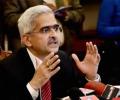
Reserve Bank Governor Shaktikanta Das has pitched for policy support from all sides -- fiscal, monetary and sectoral -- to nurture recovery of the economy hit by the second wave of the coronavirus pandemic. The dent on economic activity due to the second wave of the pandemic during April-May necessitated continuation of monetary measures to support the process of economic recovery to make it durable, Das had said while participating in the meeting of the Monetary Policy Committee (MPC) earlier in the month. "Overall, the second wave of COVID-19 has altered the near-term outlook, and policy support from all sides - fiscal, monetary and sectoral - is required to nurture recovery and expedite return to normalcy," Das said, as per the minutes of the meeting released on Friday.

'The USA crossed 50,000 deaths in 23 days, Brazil in 95 days and Mexico in 141 days. India took 156 days to reach this national figure'
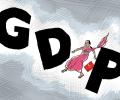
India's GDP is estimated to grow at 7.4 per cent in the financial year 2022-23 with rising prices triggered by the Russia-Ukraine conflict posing as the biggest challenge to the global economic recovery, Ficci's Economic Outlook Survey released on Sunday said. According to the survey, the Reserve Bank of India (RBI) is likely to start a rate hike cycle in the second half of 2022, while a repo rate hike of 50-75 bps is expected by the end of the current fiscal. The RBI is expected to continue supporting the ongoing economic recovery by keeping the repo rate unchanged in its April policy review, the survey said.

M&M was the biggest gainer in the Sensex chart, rising 6.51 per cent, followed by NTPC, PowerGrid, SBI, HDFC Bank, Asian Paints and Wipro. In contrast, Axis Bank, ITC, HUL, Nestle India and Sun Pharma were among the laggards.

Fitch Ratings has cut India's economic growth forecast to 8.7 per cent for the current fiscal but raised GDP growth projection for FY23 to 10 per cent, saying the second COVID-19 wave delayed rather than derail the economic recovery. In its APAC Sovereign Credit Overview, Fitch Ratings said India's 'BBB-/Negative' sovereign rating "balances a still-strong medium-term growth outlook and external resilience from solid foreign- reserve buffers, against high public debt, a weak financial sector and some lagging structural factors". The 'Negative' outlook, it said, reflects uncertainty over the debt trajectory following the sharp deterioration in India's public finances due to the pandemic shock.

Edtech firm Think and Learn, which owns Byju's brand, has not paid the July salary to employees as the company was unable to access its accounts due to a temporary stay granted by the Supreme Court on the NCLAT's decision, a top official said on Tuesday. On August 2, the National Company Law Appellate Tribunal (NCLAT) approved the Rs 158.9 crore dues settlement with BCCI and set aside insolvency proceedings against Byju's.

India's economy will do well once vaccination reaches a critical mass as pent up demand, global recovery and easy financial conditions will boost activities, RBI's Monetary Policy Committee (MPC) member Ashima Goyal said on Tuesday.

https://www.rediff.com/business/report/quality-control-orders-what-does-this-mean-for-domestic-industry/20240425.htm
